Wednesday, October 30, 2013

Creating persuasive proposals

by Jim Abernathy

{Centered}: June 2013 (Vol. 6, No. 6)‏ - The Grantmanship Center


To make a convincing request for funding, you need to understand what the grantmaker bases its decisions on. In "What They Don't Tell You" (CharityChannel, April 24 and May 17, 2013), Joanne Oppelt suggests how to present the most effective arguments to different kinds of funders.

For foundations:
  • Make sure your proposal is internally consistent so that the methods described match the budget, the proposal narrative matches the budget, and the outcomes relate to the needs described.
  • Have proposal goals that are consistent with the foundation's goals, and describe outcomes not processes.
  • Try to follow the approach the foundation uses to address issues.
  • Use the type of language that professionals in your project area commonly use.
  • Refer to credible sources of research to establish the need and the methods you will use to address that need.
  • Always follow the proposal guidelines established by the funder.
  • Establish a relationship with the foundation program officer if possible.
For corporations:
  • Show that your organization has a reputation, in the community, for accomplishing its goals.
  • Be able to describe your competition and your ability to work in partnership with other groups.
  • Make your initial presentation to the corporation in just a few pages, using mostly pictures, charts and graphs to illustrate your organization and its work.
  • Get the attention of corporate leaders by participating in events that they attend.
  • Learn about the culture of the corporation before you approach them.
  • Be persistent without being a nuisance - it may take some time before you make the right connection.
For government funders:
  • If the decision-makers are elected officials, learn as much as possible about what they see as the needs of the constituency that elects them.
  • Be able to show that your programs benefit that constituency.
  • Regularly provide information about your organization to the elected officials and their staff, and invite them to your events.

Sunday, October 27, 2013

Striking a Chord

A little news on Arts Journey Solutions - http://businesswest.com/blog/striking-a-chord-2/


Striking a Chord


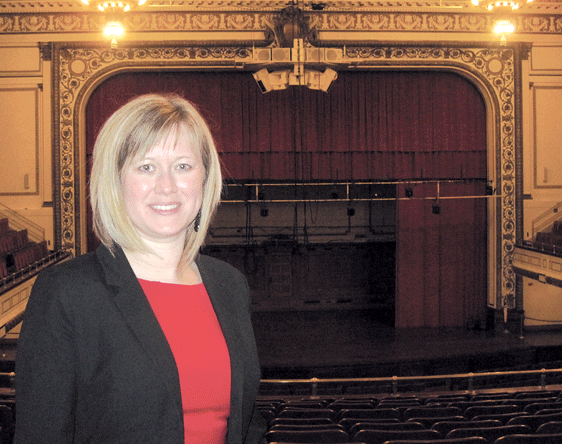
SSO’s New Executive Director Works in Concert with the Community
Audrey Szychulski
Audrey Szychulski decided long ago that she was better suited to managing an orchestra than playing in one.
Audrey Szychulski says she’s very competitive — especially, it seems, when it comes to raising money and setting and surpassing goals.
It’s a pattern that was in evidence while she was a Girl Scout growing up in Northeast Philadelphia. The neighborhoods in that area were densely settled, with hundreds of homes situated extremely close to one another, a situation she took full advantage of as she would personally account for sales of 400 to 500 boxes of cookies during those annual spring drives, easily tops in her troop.

And that pattern has continued during a career in music administration launched after Szychulski concluded that she was more suited to managing orchestras than playing in one — although, for some time, the latter was her professional ambition.

By the time she was 16, she had toured more than 20 countries as a young cellist in an ensemble, which had her seriously, but also realistically, considering her future in classical music.

“It seemed like a really fantastic life; therefore, I thought I wanted to be a performing musician when I grew up,” she said, pausing to add a ‘but’ as she searched for the right words to explain why she didn’t pursue that exact route for a career.

“Well, I’m only an OK player,” she admitted, adding that this assessment changed her specific focus, but not her desire to be involved with music professionally, a passion that has taken her to Springfield and the position of executive director of the city’s symphony orchestra.

A math whiz in high school, her education led to private teaching of cello, string specialties, and arts administration, before landing managerial positions with three orchestras, most recently the Erie Philharmonic in Erie, Pa.

Szychulski found similar challenges at all those organizations — especially the task of making the public aware of their area symphony and building an audience base — but eventually discovered that effective collaboration with businesses and other arts-related institutions is the key to establishing, and enhancing, an orchestra’s presence in a given community.

And that’s one of many lessons she’ll work to apply with the Springfield Symphony Orchestra (SSO), where she will succeed Michael Jonnes, who retired last December after leading the orchestra for 15 years.

Another of these lessons is that she is happiest — and an orchestra is most successful — when the administrative director and the conductor are on the same page and working, well, in concert with one another, and she expects such a relationship in her latest career challenge.

“It is a unique situation where you have an organization that has two staff leadership positions,” she explained. “The conductor is the head of everything artistic, and my job is to run the marketing, audience development, and organize the staff members to see that all of the things that are needed to get to a performance are wonderful.”

Szychulski’s extensive and serious musical background impressed Kevin Rhodes, the SSO conductor since 2001, who called her “the whole package.”

“She’s so enthusiastic and has new ways of looking at what we do; she doesn’t have to reinvent the wheel here, but we’re always eager to try new things,” said Rhodes. “We’re celebrating our 70th year, and I think that speaks to the orchestra’s ability and desire to continually be adapting, changing, and being flexible. I think we’re going to have a great time.”

For this issue, BusinessWest talked with Szychulski about her goals for the future of the SSO and her new partnership with Rhodes in an ongoing effort to create a vision for the orchestra and make it reality.
Achievements of Note
Szychulski graduated from Mansfield University in Pennsylvania, earning a degree in music education, and was essentially self-employed coming out of college. She grew her venture to nearly 70 private music students per week before eventually accepting a teaching position at Elmira College in New York, which she kept for five years.

A friend recommended her for a part-time position as manager of education and operations for the Orchestra of the Southern Finger Lakes (OSFL) in Corning, N.Y. Just 24 at the time, she landed the position and was immediately involved with the youth orchestra, a junior string ensemble, a community chorus, and the logistical aspects of coordinating all the concerts. A few months later, she was filling in as interim when the executive director left. At summer’s end, the OSFL board came to Szychulski and said it wanted to offer her the job.

“But I’d never applied for it,” she said, noting that, while the board had interviewed several people for the position, it noticed that she’d saved and raised more money than the organization had ever seen, and in just four short months.

Starting with a $200,000 budget, she grew it to $400,000, due in large part to launching the OSFL’s first major donor society.

Her next career stop led her to the executive director position with the Norwalk Symphony in Connecticut, which was celebrating its 70th anniversary at the time. Szychulski found that Connecticut has more orchestras per capita than any other state, and also learned more about raising money very quickly to help an organization that was financially struggling.

From Norwalk, she moved on the Erie Philharmonic, where she planned the organization’s 100th anniversary (taking place this fall) and, with a $1.5 million budget, created a strategic plan that balanced a budget that had not been balanced in a decade, showing a six-figure profit by the second year. That plan also helped to increase subscriber sales by 33%.

Concurrently, she earned a master’s degree in Arts Administration―— equivalent to an arts MBA — from Drexel University, and was one of the first students to earn that degree online.
It was Szychulski’s 2011 thesis at Drexel that Rhodes found to be of great interest when he first read her résumé.

“The first thing you see is a piece of paper in front of you, and what stood out was what she was doing in her master’s … the focus on social media and electronic media,” said Rhodes. “All of that is tremendously important, very topical, and very new.”
That thesis involved a survey of 797 professional organizations regarding their use of social media, which had a healthy 30% response. She documented how often they were posting on Facebook and Twitter, who in the organization was actually doing the posting on social media, and which orchestras were most active with social networks related to their overall music programs.

Szychulski explained that there are only 10 orchestras in the nation the size of the New York and Los Angeles philharmonics, and that most orchestras operate on a budget of $500,000; the SSO’s budget is $2 million.

“What I found was that orchestras of our size, not the big guys, not the little guys, are the organizations that are most active and are looking for awareness and audience-development efforts,” she told BusinessWest. “But I found a funny thing: everybody wants to be raising money online, but fewer than 15% actually asked anyone to make a donation online through their social media.”
Her 230-page thesis concludes, among other things, that the reason for so little online fund-raising is usually the lack of a strategic plan.

But while the Erie job was a good fit professionally, Szychulski desired to work in a more urban setting and with an orchestra that had a stronger connection to the community. Hearing about the SSO opportunity through the musical grapevine, she became intrigued, applied, and immediately became impressed with the hiring committee’s questions, as well as the answers to her queries.
“They had a headhunter, and she asked all the right questions to make sure I knew how to do my job,” Szychulski explained. “They took the time to get to know me as a person, and looked to see that Kevin and I would be compatible as partners.”

During the hiring process from February to May of this year, Szychulski saw that the SSO was looking for a long-term relationship.

“This was an organization that wanted me to be happy, fit into their culture, and really flourish with them,” Szychulski recalled. “It was all about the good fit and how we would all get along together.”
With all parties agreeing it was a good match, she officially started on Aug. 1.
Being in Harmony
Because orchestras in different regions of the country aren’t competing with each other, many marketing ideas are shared, but it’s the creativity on the part of the local symphony management to correctly collaborate with others in the community that is the key to success, she told BusinessWest.
One of those shared ideas worked well in Erie, she went on, referring to something called the Beat Beethoven 5K road race, complete with a man dressed as the famous composer setting the pace for runners from the Erie Running Club and other fitness enthusiasts in a creative collaboration with a different demographic, set to the sounds of Beethoven’s famous Fifth Symphony. The opus, which happens to be 30 minutes and 17 seconds long, offers ample time for most runners to finish a 3.1-mile race and receive a voucher for a ticket to an Erie Philharmonic concert.

Similar imaginative and collaborative efforts could be employed in Springfield to help the SSO reach and surpass its goals for raising money — and awareness, said Szychulski. With 50% of revenue for a typical orchestra directly attributed to ticket sales and subscriptions, the SSO has to raise the rest through donations, sponsorships, tuition to the youth orchestra, and other means.

To that end, the orchestra launched the Forever Symphony, Campaign for Permanence three years ago. It has enabled the organization to raise $7 million for an endowment, said Szychulski, adding that, before she arrived, Springfield’s local arts directors supporting the creation of a proposed cultural district had already begun meeting monthly to share programming schedules and ideas for how to support each other collaboratively.

Internally at the SSO, mid-October saw the first scheduled monthly meeting of the orchestra board’s marketing committee made up of board and staff, including Jane Clark, the new director of development, and Ann Rasmussen, the new director of marketing.

And while collaboration with outside entities isn’t anything new to the SSO, Rhodes feels that Szychulski’s past engagement in unique partnering efforts will be a huge asset to the organization.
“And Kevin’s product is beautiful,” Szychulski said, adding quickly that there will be no altering of what Rhodes has been producing so successfully for years. However, she will now be able to plan around what he does on stage and, through community collaborations, grow and diversify the audience and create more connections between the orchestra and the community.
The Finale
Szychulski told BusinessWest that she believes she’s found a good fit personally and professionally, and she’s ready to take her competitive nature, forged while selling Girl Scout cookies, and use it to strike a chord with as many different demographic groups as she can in the Pioneer Valley.

“It’s like the slogan we put on some of our PR materials: ‘there’s a little bit of symphony in everyone,’” she explained, adding that it’s her unofficial job description to prove that point.

As for Rhodes, he’s looking forward to working with Szychulski to propel the SSO to new heights.
“As we adapt to an entirely new marketing paradigm, Audrey’s expertise and enthusiasm for remaining on top of trends is going to be absolutely integral to the future success of the orchestra,” he said. “I’m very confident we’re in great hands.”
Elizabeth Taras can be reached at taras@buisinesswest.com

Friday, October 25, 2013

Social Media - How to Apply it as Technology and Marketing - Part 5


The Power of Email Marketing - Barack the Vote

The 2008 Presidential Election is a great example of how understanding social media and e-marketing allows others to spread your message. 

In true AJS fashion, it’s time to of course recommend a book or two.  J  If you know nothing about e-blasts you should really read the two books suggested below.

Patron Mail – Eugene Carr
·      Wired for Culture
·      Sign-Up for Culture


Eugene Carr founded Patron Mail which is a service for sending e-blasts.  DO NOT send e-blasts through your regular email.  When you send to more that 25 people at a time on a regular basis e-services start to mark you as spam.  USE a service.  Patron Mail and ConstantContact are the most well known.

Carr’s Books talk through the basics of why connecting with individuals is good for you (duh) but also go through some of the rules you need to know.  Things like spam laws that you need to obey so your email is not shut down.  Again, if you don’t know these things READ THESE BOOKS.  (FYI, both books are light reads of only about 100 pages.)

So one of the biggest things you need to focus on while using e-blasts is building your email list.  Again in class / workshop it’s now your turn to come up with 10 ideas.  Here are a few from a former organization I worked for:

  1. When students register for the Youth Orchestra or Junior String Ensemble we asked for the student emails, the parent emails, and private and school teacher emails.  This helps to build 3 to 4 lists within our email distributions.
  2. When students register for the Hertzog Soloist Competition we also required an email address.  This competition is geared towards the best of the best in high school playing abilities.  As the competition is run every year it allowed us to advertise to a core group we know will have a strong showing at the competition.
  3. We also required email addresses when professional musicians register for audition calls.  Like with the Hertzog this helps to keep track of talent and supply.
    1. For 1 through 3 the registration process for all of these is also an online form.  As we were small budgeted the form was created for free through Google Docs and any required payments were through PayPal.
  4. We asked for email addresses during all snail mail sales (Renewals, New Sales, and Solicitations)
    1. OSFL Subscriptions
    2. Social fundraising events
    3. Musicians’ Choice (chamber music)
                                               i.     Besides gaining in our number of email addresses this also created marketing segments.
                                             ii.     Everyone in office was also trained to ask for an email address while helping with a called in sale.
  1. Online sales
    1. As we used PayPal the order comes through from the email address making the order.  We used this information for future communications and also to requested information as to if online sales are their preferred method of purchase.
  2. Sign-Up Form
    1. On our website and in the SymphonEmail for if people forward them to a friend.
  3. From the Arts Council, Chamber of Commerce, and area Rotaries
    1. As members of all of these organizations we were giving email addresses for all the other members.  We send introduction emails, informational only, to find people who want to be a part of our list.  (if you have read the books above you’d know that asking permission is required by law!)
  4. Through our March Student and Family Ticket Specials
    1. Each season, to coordinate with Music in the School Month, we offered tickets at a discounted rate of 60% off to all students and families who pre-register through their school.  Part of the process involves providing their email and snail mail addresses.
  5. Program Inserts
    1. We provided forms currently for sales where the email address is asked for several times throughout the season but this was just to specifically ask for email addresses.
  6. Lobby
    1. Solicit emails in the lobby of a performance.  At almost every concert we staffed at least one table for sales, a raffle, information, etc.  Adding an email location can easily be incorporated at concerts.

Ok, your turn.  What else jumps to your mind?

Tuesday, October 22, 2013

Social Media - How to Apply it as Technology and Marketing - Part 4

Word of Mouth Marketing - Girl, I Saw the Best Performance Last Night

So people are a wonderful marketing tool.  When they are happy with what you are doing they tell lots of people.

Here’s a review of the types of people Gladwell taught us about:

·      Gladwell:
o   Connectors
o   Mavens
o   Salesmen

Paul Gillin tells us about another types of person.  

·      The New Influencers:
o   Enthusiasts

Enthusiasts are a variation of connectors and salesmen.  Mixed together these traits are people excitedly telling all their friends how wonderful your organization is. 

One of the best ways to let all these types of people spread the word of your organization (both online and in person) is to spend time brainstorming Word of Mouth Strategies.

In a class or workshop setting this is where I ask those attending to brainstorm 10 strategies.  In our online setting here are some suggestions that mix the in person with the online for an orchestra.

1.     Ask patrons to “Tweet” during intermission and post concert.
2.     Link cell phone rings to programming selections for discount specials.
3.     Tell-a-Friend Forms
a.     Make sure these forms are available on every page of the website and in emails.
                                               i.     Make it fast
                                             ii.     Ask for multiple friends to be suggested
                                            iii.     Personalize as much as possible
4.     Offer certain specials only to your online friends.
a.     Will make these friends feel special and more likely to interact with you
5.     Make sure the appropriate people are blogging
6.     Online, look for other places where people are talking about you and join in
a.     Say thank you
b.     Share information
c.     Always be honest
7.     Put a special offer inside emails that can easily be forwarded to others
8.     Plan an event centered around your online “friends” being in the know
a.     Examples from a past organization -  “Where is Toshi?” Contest (7/20 through 2/26, Arts Fest is a whole town activity over the weekend of 7/25-7/26))
                                               i.     We had a 6” x 4” poster of Toshi made (it’s bigger than he is).  It’s been hanging in one of our office windows over the last 2 weeks.  During the week of the festival Toshi will be “visiting” various locations in the Gaffer District (downtown area).  This has been advertised to all our social media friends and info is will be on our home page for the whole week.  Each day the first three people to email in about where Toshi is will receive a pair of ticket vouchers for the upcoming season and be entered to win lunch with Toshi sometime next month.  Hints will be given throughout the day until he is found mostly through the OSFL Twitter and some of Facebook and MySpace.  At the bottom of the poster is www.OSFL.org so all those who see it and want to know what is going on will be able to visit our website.  In the process we are also enlisting the help of a lot of area businesses who are excited about the idea.
9.     On an online site, ask weekly questions to create a forum for people to talk and interact with the organization.
10.  Have an online contest where the first so many people to share some info of yours win a pair of tickets to an event.

So there are mine.  What others do you have for getting your fans active?

Sunday, October 20, 2013

Foundations still tying grantees up in red tape

by Jim Abernathy

{Centered}: June 2013 (Vol. 6, No. 6)‏ - The Grantmanship Center


By requiring far more information than the size of a grant may justify and demanding data for which they have no need, foundations are continuing to place undue burdens on their grantees, according to Project Streamline, a collaborative effort that represents both grantmakers and fundraisers. In "Applying for Grants Is Still a Burden, say Fundraisers," (The Chronicle of Philanthropy, May 23, 2013), Caroline Preston summarizes the findings of Project Streamline's survey of 460 grantmakers and 300 grantseekers:
  • Although most funders think they have made applications for small grants easier, 72% of grantseekers think what is required is inappropriate for the amounts granted.

  • 80% of grantmakers say they ask only for necessary information, but 84% of grantseekers say very few funders accept common grant application forms and 62% don't allow charities to submit standard annual reports.
  • 91% of the funders surveyed said they accept proposals electronically, but many grantseekers find the online systems difficult to use.
  • Grantseekers object to having to submit financial information in the specific format required by a funder rather than being able to use the budgets and financial reports their organizations have already developed.
  • Grantseekers say they have a hard time getting the clear guidance they want from foundations, but 91% of grantmakers think that their communication systems work well.
  • 54% of grantmakers have no plans to seek advice from grantseekers, and 41% of grantees have never been asked for their advice.

Friday, October 18, 2013

Social Media - How to Apply it as Technology and Marketing - Part 3

Your Website - A Portal to the World

Let’s think about things as they really are within the New Rules.  Your office is probably open only 5 days a week for specific hours.  Your website is viewable 24 hours a day all the time.  It is what people make a first impression with.  It is where they go when they want to at whatever time they want to.  It is where they want answers when they want them at that moment.

Some simple straightforward guidelines:
·      Content Rich
·      Influencing Buying / Donating
·      Search Engine Marketing

Make the content rich.  Lots of pictures, visuals that are appealing, the right descriptors about them.  And don’t forget the basics – who, what, when, where, and why.

They are on your site; they must have gone there for a reason.  Make it easy for they to buy or donate.


Search engine marketing (SEM) is a form of Internet marketing that involves the promotion of websites by increasing their visibility in search engine results pages (SERPs) through optimization and advertising. SEM may use search engine optimization (SEO), that adjusts or rewrites website content to achieve a higher ranking in search engine results pages or use pay per click listings.  Ok, for this, hire or talk to an expert.  Know you need it, but I also know I don’t know enough to tell you how to do it.  Call experts when you need them!


Next up will be….. Word of Mouth Marketing.